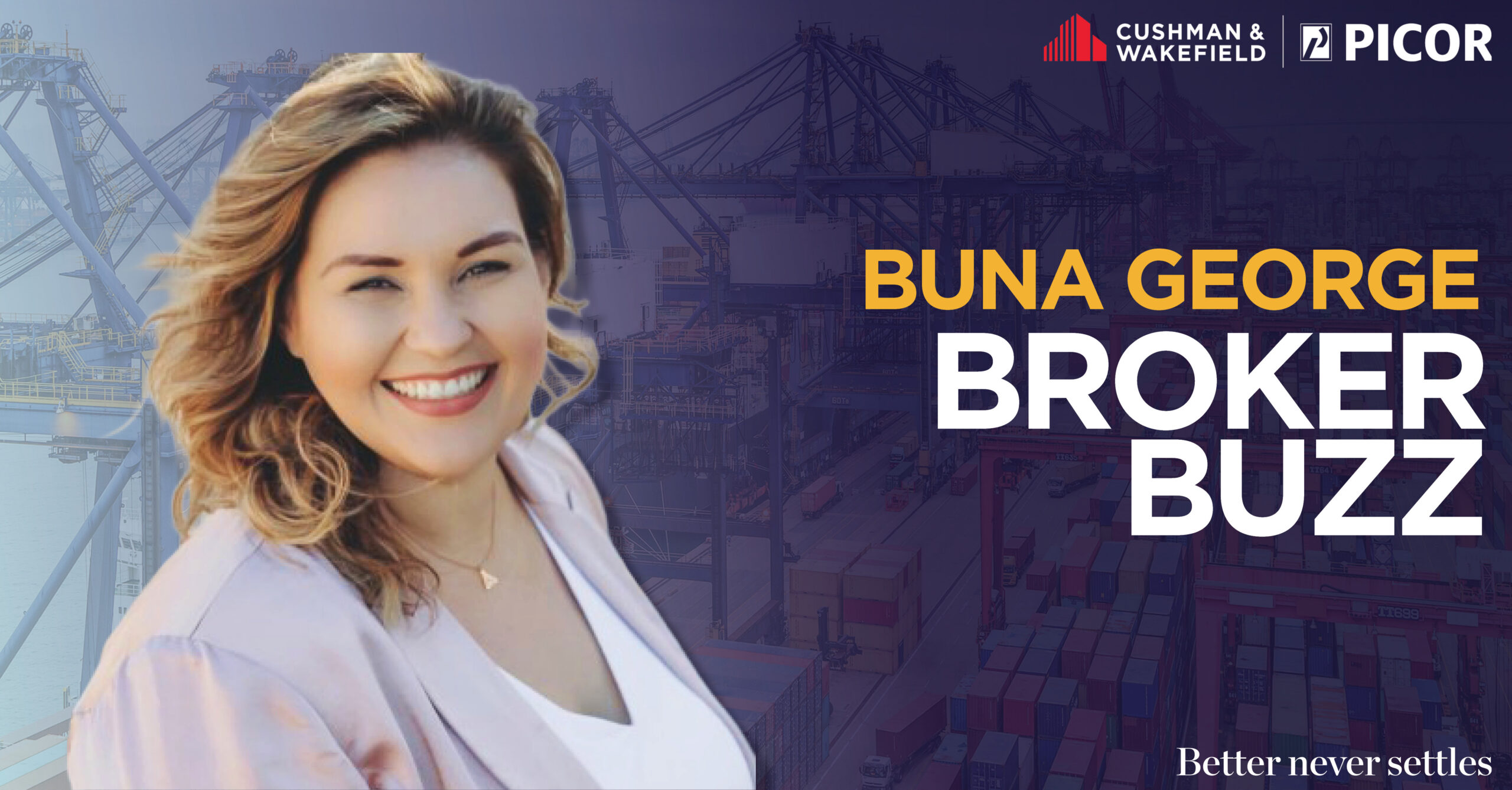
This week, we’re excited to welcome Buna George to Cushman & Wakefield | PICOR’s industrial brokerage team! Based in Yuma, Buna brings more than a decade of real estate experience and a background in land development, infrastructure planning, and cross-border trade.
A Yuma native fluent in English and Spanish, Buna has built relationships with communities and business partners on both sides of the U.S.–Mexico border. Since 2018, she has served as Executive Director of the Greater Yuma Port Authority, where her work has included coordinating the planning and development of more than 120 acres of industrial land adjacent to the San Luis commercial port of entry.
Get to know Buna as she shares her professional experience and interests outside of work. Her focus in Yuma also gives us an opportunity to learn more about the region’s commercial real estate market and what makes it a great place to live and do business.
What drew you to C&W | PICOR, and what are you most looking forward to as you join the team?
I’ve held my real estate license since 2013. Within the last 7 years, my career has been on the public side of development: planning infrastructure, bringing partners to the table, and positioning land so it’s ready for investment. C&W | PICOR gives me the chance to take that experience to the transaction side, backed by a team that knows Southern Arizona and a global platform that can connect Yuma to clients well beyond our region. I’m most looking forward to helping companies and their vendors see what I’ve newly observed for years: Yuma, is open for business and ready for growth, and the right deals can turn that potential into real jobs and investment.
As a Yuma native, what would you tell a business considering a move to the area? What makes Yuma a great place to live and do business?
Yuma County sits where California, Arizona and Mexico meet, so you have access to three markets from one location. We’re a short drive from two international commercial ports of entry, and our agricultural industry feeds much of the country through the winter months. Beyond logistics, Yuma is a community where relationships still matter. Leaders here know each other, pick up the phone, and work to get things done. For a business, that means fewer barriers and real partners. For families, it means affordability, sunshine almost every day, and a bicultural community that welcomes newcomers.
As someone who works with partners on both sides of the border, what do you wish more people understood about the role cross-border trade plays in Southern Arizona’s economy?
Cross-border trade isn’t just trucks crossing a line. It’s the produce in grocery stores across the country, the manufacturing jobs in Sonora that depend on foreign suppliers, and the warehouses, brokers, trucking companies and families in our communities that make it all move. When something disrupts the border, whether it’s a policy change, wait times or protests, the effects reach far beyond the port. I’ve sat at the table with drivers, carriers and consular officials, and the lesson is always the same: San Luis, Arizona and San Luis Río Colorado, Sonora aren’t two separate economies. They’re one region, and we succeed when we plan that way.
You helped coordinate the development of more than 120 acres near the San Luis commercial port of entry. What did that experience teach you about bringing an industrial project from concept to reality?
My role with the Greater Yuma Port Authority took me down that path. The organization spearheaded the “two port solution”, meaning separating pedestrian and private vehicular traffic from the commercial traffic for the means of safety and efficiency. The surplus land, once the commercial port was built, and the ADOT inspection station was erected, was meant for industrial development. That was circa 2010, now think about what transpired from 2010 to 2023, from the economic crisis, to unsteady markets, leadership changes and covid, the interruptions hindered large scale growth throughout the County.
Once the board had collectively decided that seeking funds to develop and liquidating the asset was the goal, I hit it head on. Mind you, with very limited large scale development knowledge, just a board of directors who trusted me to get the task done. It also taught me that land is the easy part. The real work is aligning everyone who has a stake: federal agencies, in this case the Army Corps of Engineers who holds the ownership of a 90 ft easement between private property and the international boundary, the state, the city and county, utility providers, private investors, and the industry users who will eventually occupy the site. It’s mandatory, infrastructure has to come first, and it rarely moves as fast as the market wants it to.
Patience matters, but so does persistence. I relied heavily on Yuma County as they undertook the project due to their contribution of ARPA funds for the initial site development, our EDC who helped us apply for grants for the box culverts that gained access to the park in order to conserve water that ran through the BOR’s 242 lateral canal. You have to keep the vision in front of people long enough for funding, approvals and interest to line up. My background in urban planning helped me understand the process; experience taught me that relationships are what actually move a project forward.
What’s your favorite activity outside of the office?
Family comes first, and our dogs are very much part of the family, so most of my downtime is spent at home with all of them. I love to cook, especially for the people I care about. I’m also an avid reader and writer, and I make strength training a priority because it keeps me grounded and strong for everything else on my plate.
What’s something about you that people might be surprised to learn?
People who know me from boardrooms and port meetings are often surprised to learn how much I value stillness. I practice reiki and meditation, and one of my favorite ways to reset is a traditional temazcal, the Indigenous sweat lodge ceremony practiced across Mexico. Those practices help me show up calm, clear and present, which matters when you’re trying to bring people together around difficult decisions.
Do you have a favorite quote or piece of advice that has stayed with you?
Observing leaders I admire, I’ve learned not to wait for an invitation to the table. Bring your preparation, know your worth, and speak with kindness, because the people coming behind you are watching how you use your seat.
To get in touch with Buna George, please email her at bgeorge@picor.com or by phone at 928-315-9070.


