To read the full report on Tucson’s Multifamily market activity in Q1, click here
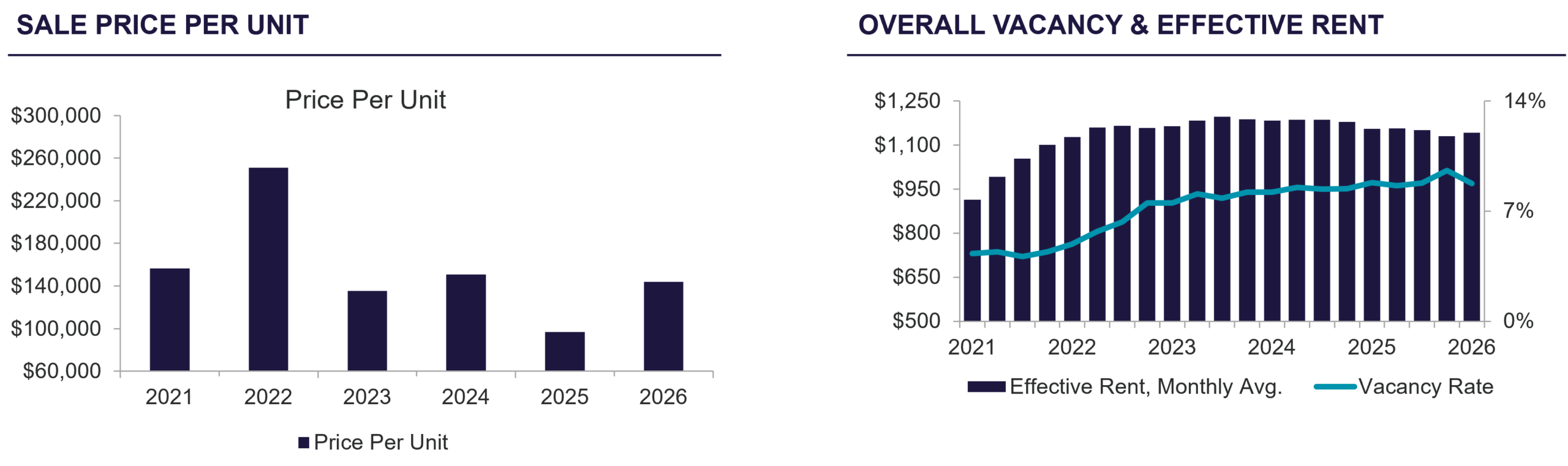
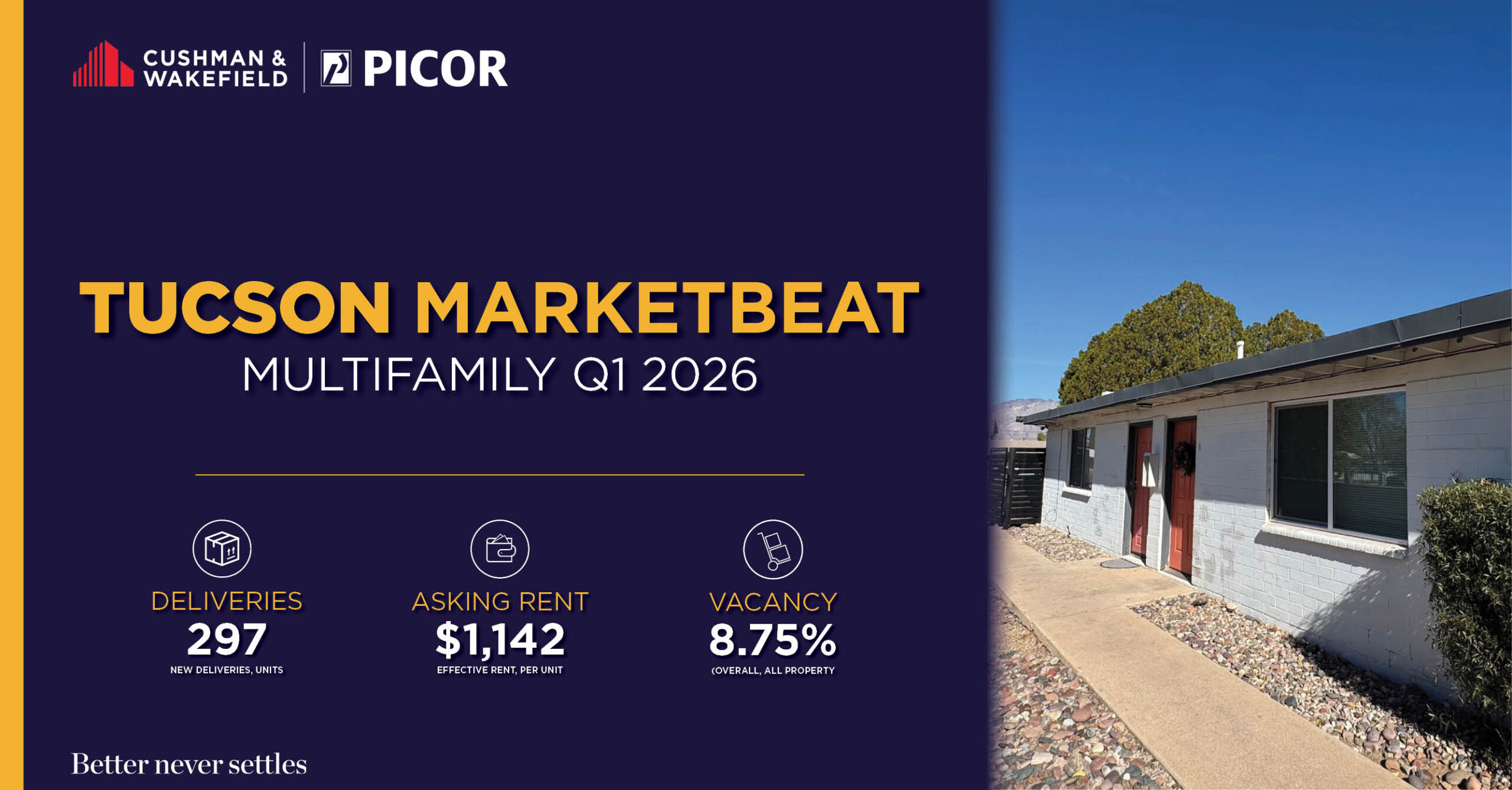
2026 Q1 of the Tucson multifamily market reflects more conservative underwriting alongside a generally positive trend for owners, with vacancy declining to 8.75%, driven by improvements across 10 of the 15 submarkets, led by Oro Valley/Catalina, while Southeast Tucson remained the highest at 14.24%. While rents are slightly lower YOY (-$12), they are showing a positive trend ($12 up) compared to last quarter. Although large-scale investment activity remains limited, with just seven arm’s-length transactions (40+ units) recorded, mid-sized properties continue to trade steadily, and assets offering seller financing are attracting significantly stronger demand and achieving higher pricing. The average age of traded assets increased slightly to the mid-1980s, reflecting continued investor focus on older, value-add opportunities amid more disciplined underwriting.
“Our primary goals this quarter were maintaining occupancy and securing qualified tenants. We have seen an increase in applicant denials alongside a rise in available market inventory. While Phoenix appears to have stabilized, historic trends suggest Tucson will likely follow in the coming years. Currently, renovated units are sitting on the market longer as renters remain budget-conscious. Move-in promotions have become standard to incentivize decision-making, and maintaining curb appeal and high quality unit turns remains essential for attracting prospects. Many of my investors are prioritizing retention and cash flow, with plans to increase rents once the market stabilizes. We are optimistic that a busy second and third quarter will help fill vacancies, provided we do not see a repeat of last year’s 20% decrease in University of Arizona enrollment.” – Chris Meehan, 520-277-2727, Fort Lowell Realty & Property Management
“The first quarter of 2026 reflected market hesitancy as investors cautiously awaited a sustained decline in interest rates; for the first time in nearly three years, rates dipped below 6% in late February, only to reverse course when global events triggered a rapid flight from securities, pushing bond yields higher by approximately 23 basis points within days. Despite this volatility, savvy investors capitalized on the brief rate compression, resulting in Tucson-market originations with an average interest rate of 6.04% and an average CLTV of 71.06%, excluding 1031 exchange down payments on purchase transactions. Looking ahead, market conditions appear cautiously favorable, with global events continuing to influence sentiment on a headline-by-headline basis but showing signs of improvement. Current multifamily pricing generally in the low- to mid-6% range depending on origination fees and fixed-rate periods. Underwriting challenges persist, particularly in securing insurance coverage at reasonable premiums, yet Tucson’s fundamentals remain strong, supported by the I-10 corridor, the University of Arizona, and the $3.6 billion Project Blue data center, all of which continue to underpin long-term multifamily demand.” – Robert Motz, 520-202-0672, Pima Federal Credit Union
As we turned the new year of 2026, the Tucson multifamily market demonstrated an increase in activity and demand in the marketplace. The market seems to place precedent on the age of buildings, unit mix, and location. Properties well located near recent commercial and retail growth saw ample demand in the market. The assets positioned in less desirable areas saw a decrease in investor interest, requiring higher cap rates for dispositions to occur. One-way owners are working to combat that is by offering seller financing to increase demand for their assets. This flexible financing offers immediate solutions to investors without tying them to high-interest rates or low LTV conventional options. We continued to see leasing and rental efforts slow as more inventory and options have become available for tenants. This is resulting in slight concessions being offered to attract residents and offering discounted deposits as motivation. Insurance is still causing head winds depending on the age of buildings and the number of units per building.